
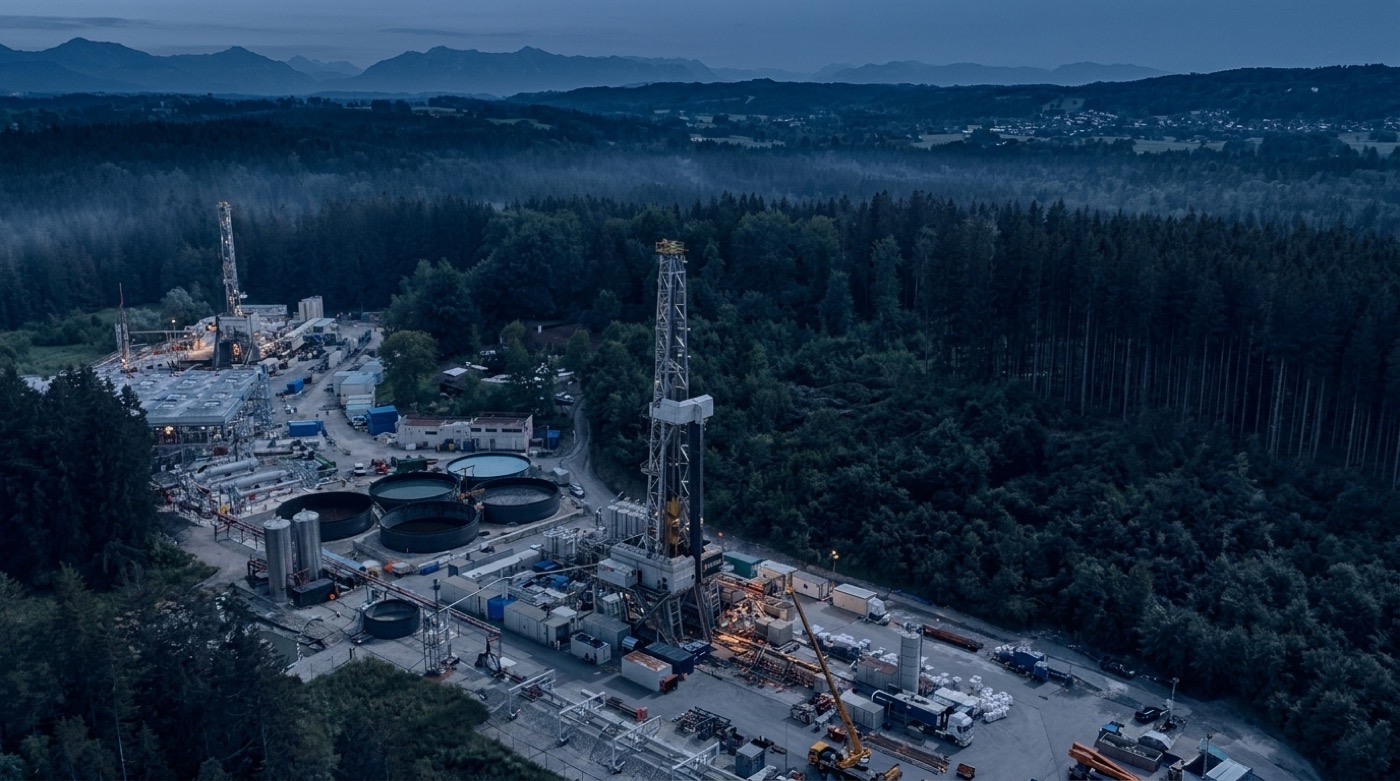
Heat isn't the bottleneck. Hitting the target is.
Closed-loop and enhanced geothermal systems require two wells to intersect precisely, or multiple wellbores to be spaced exactly to access specific zones of a heat reservoir. At depth, conventional surveys simply aren't accurate enough to guarantee a connection.
Without precise placement, a closed-loop design fails and the economics of the project collapse.
The proven physics of well intersection.
Magnetic ranging deterministically guides one wellbore to intersect another, the same technique that made relief well drilling, SAGD and coal-bed-methane intersect drilling possible in oil & gas.
Gunnar deploys active and passive ranging to form closed loops and to space multiple wellbores accurately across a reservoir, unlocking geothermal designs that were previously impossible.
Precision placement for the geothermal era.
Proprietary tools for this application.
Geothermal Well Placement, your questions, answered.
Why is magnetic ranging essential for geothermal?
Closed-loop geothermal requires two wellbores to intersect precisely at depth, and multi-zone designs require exact spacing. Conventional surveys aren't accurate enough to guarantee connection; magnetic ranging provides the deterministic precision needed.
What is a closed-loop geothermal system?
It's a deep, sealed loop, like a heat pump far underground, formed by drilling two wells that intersect. Fluid circulates through the loop to extract heat without producing reservoir fluids. Ranging makes the connection possible.
Can ranging space multiple wells accurately?
Yes. The same technology used to intersect wells is used to hold precise separation between wellbores, allowing operators to target specific zones of a heat reservoir.
Is this proven technology?
Yes. Magnetic ranging made relief well, SAGD and coal-bed-methane intersect drilling possible in oil & gas. Gunnar is applying that same proven physics to geothermal.