
 4:29
4:29 THE CHALLENGE
A vertical well taps only a sliver of the aquifer.
A vertical water well contacts only tens of feet of aquifer, and urban growth limits where new wells can go, capping municipal supply.
Connecting a horizontal drain or satellite laterals to an existing cased well demands a precise, deterministic intercept that conventional surveying can't deliver.
THE GUNNAR APPROACH
Range to the target, then drain or cross it.
Gunnar drills from an offset well and steers a precise intercept of the cased target with magnetic ranging, turning a vertical water well into a long horizontal drain, or tying multiple satellite laterals into one parent well.
That same deterministic placement guides horizontal directional-drilling (HDD) river and utility crossings, where knowing exactly where the bore is matters as much as it does downhole.
SCOPE OF WORK, ONE INTEGRATED TEAM
More water per well, placed with certainty.
01
Horizontal water-well drains
Convert a vertical well into a long horizontal drain to multiply aquifer exposure.
02
Multi-well intercept
Tie satellite laterals into a parent well to boost municipal water production.
03
Well-to-well connection
±1 ft ranging to intercept the cased target and establish hydraulic communication.
04
HDD crossings
Deterministic placement for river and utility horizontal directional-drilling crossings.
05
Cased-target ranging
Range to 16" cased production wells through shielding and shallow geometry.
06
Shallow & urban-friendly
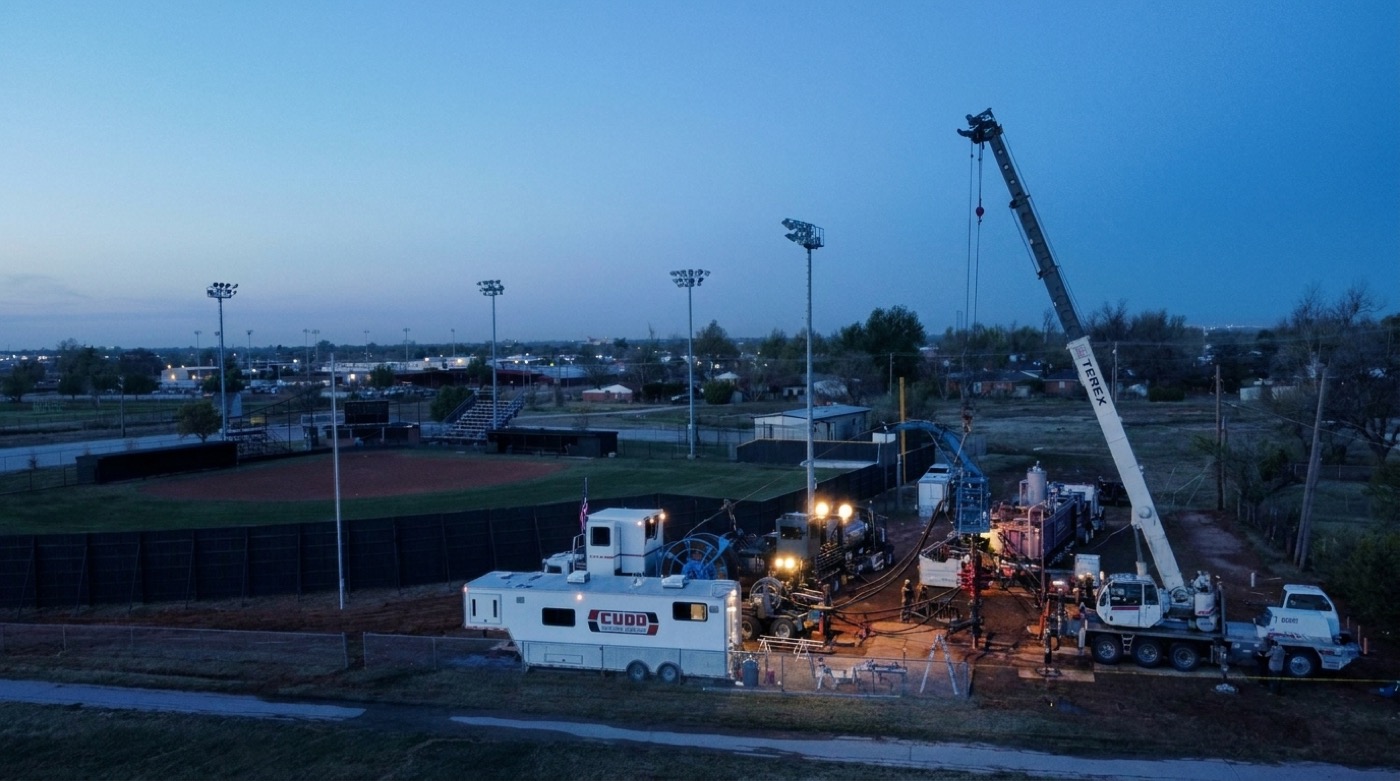
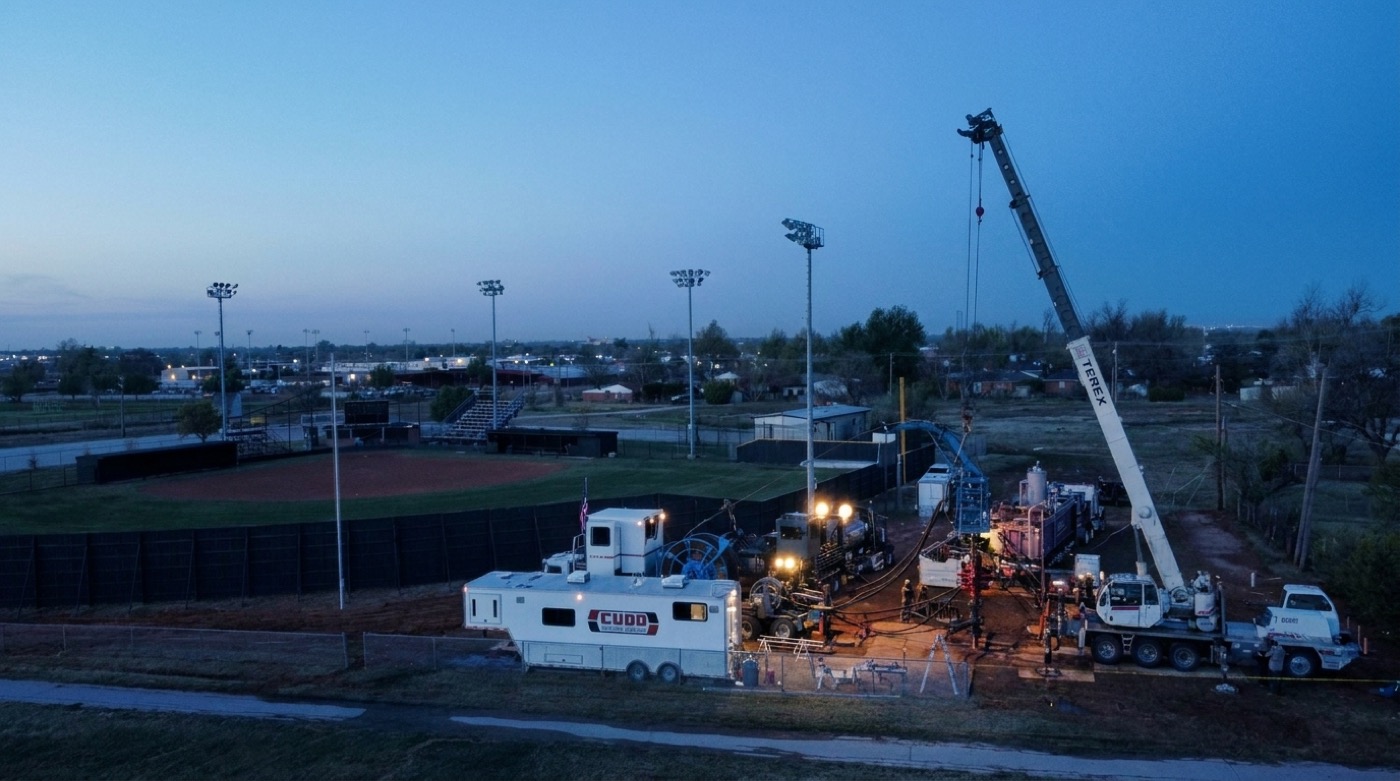
Coiled-tubing systems reach shallow targets where a rig won't fit.
TECHNOLOGY DEPLOYED
Proprietary tools for this application.
PROOF, 2 PROJECTS
Where we've done it.
WATCH, FROM THE FIELD
See it in motion.
4:29 FREQUENTLY ASKED
Water & Civil Infrastructure, your questions, answered.
How does ranging boost water production?
By turning a vertical water well into a long horizontal drain, or by tying several satellite laterals into one parent well. A horizontal drain can expose on the order of 100× the aquifer of a single vertical well.
Can you connect a new well to an existing cased water well?
Yes. Magnetic ranging steers a precise intercept of the cased target, typically to ±1 ft, and a mill establishes hydraulic communication, confirmed by flow.
Do you work on HDD river and utility crossings?
Yes. The same deterministic wellbore placement that guides a downhole intercept applies to horizontal directional-drilling crossings, where precise as-drilled position is critical.
Are these shallow, urban-friendly operations?
Often. Coiled-tubing ranging-while-drilling (CTRWD™) is built for shallow targets and tight, rig-restricted or urban locations.