
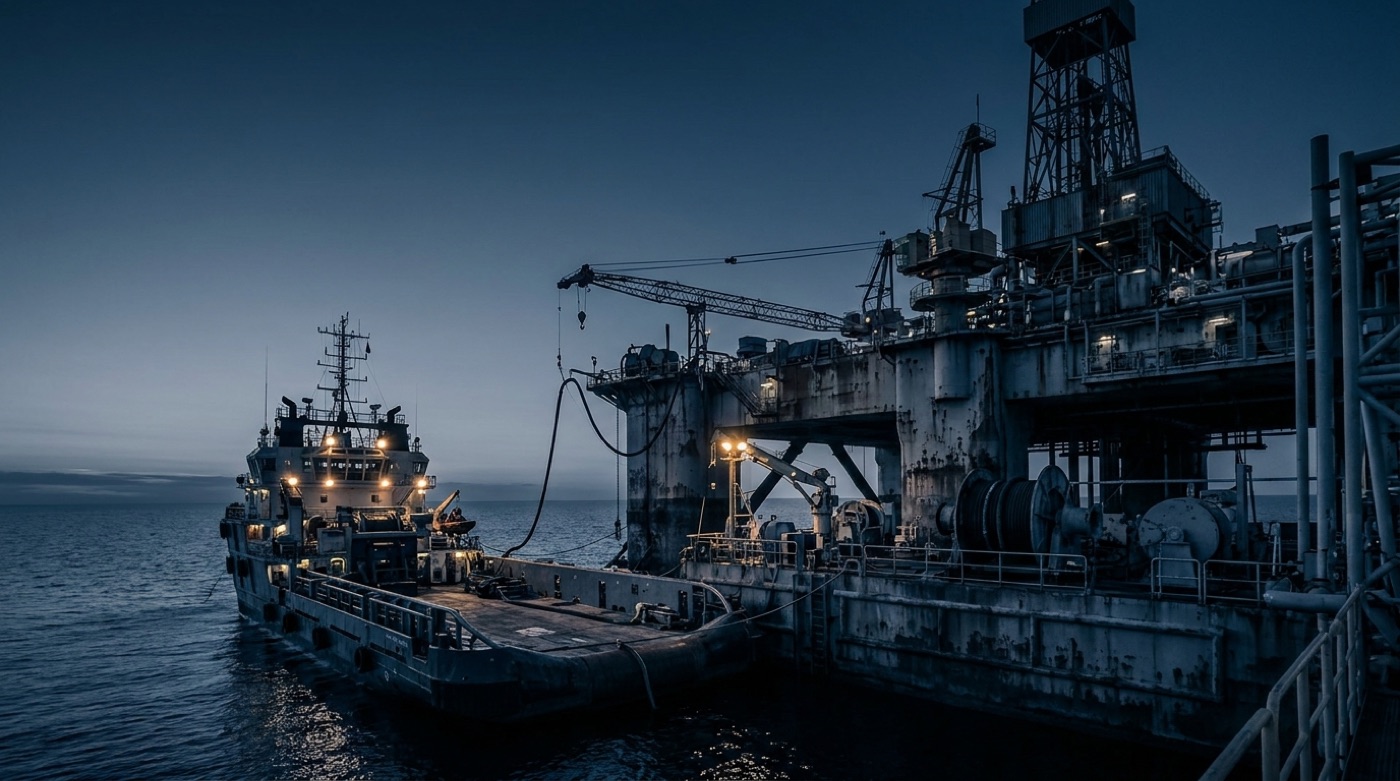
A wave of offshore decommissioning is coming as mature fields reach end of life. Offshore P&A magnifies every onshore challenge, cost, access, environmental exposure, and rewards the operators who plan around precision rather than brute force.
The decommissioning wave
Thousands of offshore wells worldwide are approaching the end of their productive lives. Regulators increasingly require permanent, verifiable abandonment, and the liability for getting it wrong sits squarely with the operator. The scale of the obligation is enormous, and the clock is running.
Offshore, every variable that makes P&A expensive onshore is amplified. Rig day-rates are an order of magnitude higher, weather windows are unforgiving, and the environmental cost of a mistake is severe.
Why brute force fails offshore
Conventionally abandoning a compromised offshore well means going in from the top and dealing with whatever is in the hole. When that is an immovable obstruction, offshore day-rates are so high that the job can balloon into a runaway liability, sometimes so cost-prohibitive that the obstruction is never properly addressed at all.
Rigless and ranging-led
Ranging-based, no-access P&A changes the calculus offshore even more than onshore. Using a system like DeadAhead™, ranging-while-drilling with wired pipe, you drill around the obstruction and mill and re-enter the target in a fraction of the time that fighting the immovable object would take. Because the technique no longer requires tripping in and out with wireline, it is more akin to a drilling operation, delivering the intercept in roughly the time it takes to drill the required footage.
Fewer round-trips, controlled barriers and first-time intercept success translate directly into shorter weather-window exposure and lower total cost on assets where every hour is at a premium.
Plan before you mobilize
The biggest offshore savings are designed in, not discovered offshore. Engaging ranging engineering during decommissioning planning, to assess well integrity, locate uncertain or unrecorded wells, and choose the right method, turns an open-ended liability into a costed, de-risked program.
- Offshore amplifies every onshore P&A cost and risk, rig rates, weather, environment.
- Ranging-led, rigless P&A cuts the most expensive rig time and open-hole exposure.
- The biggest savings come from involving ranging engineering at the planning stage.